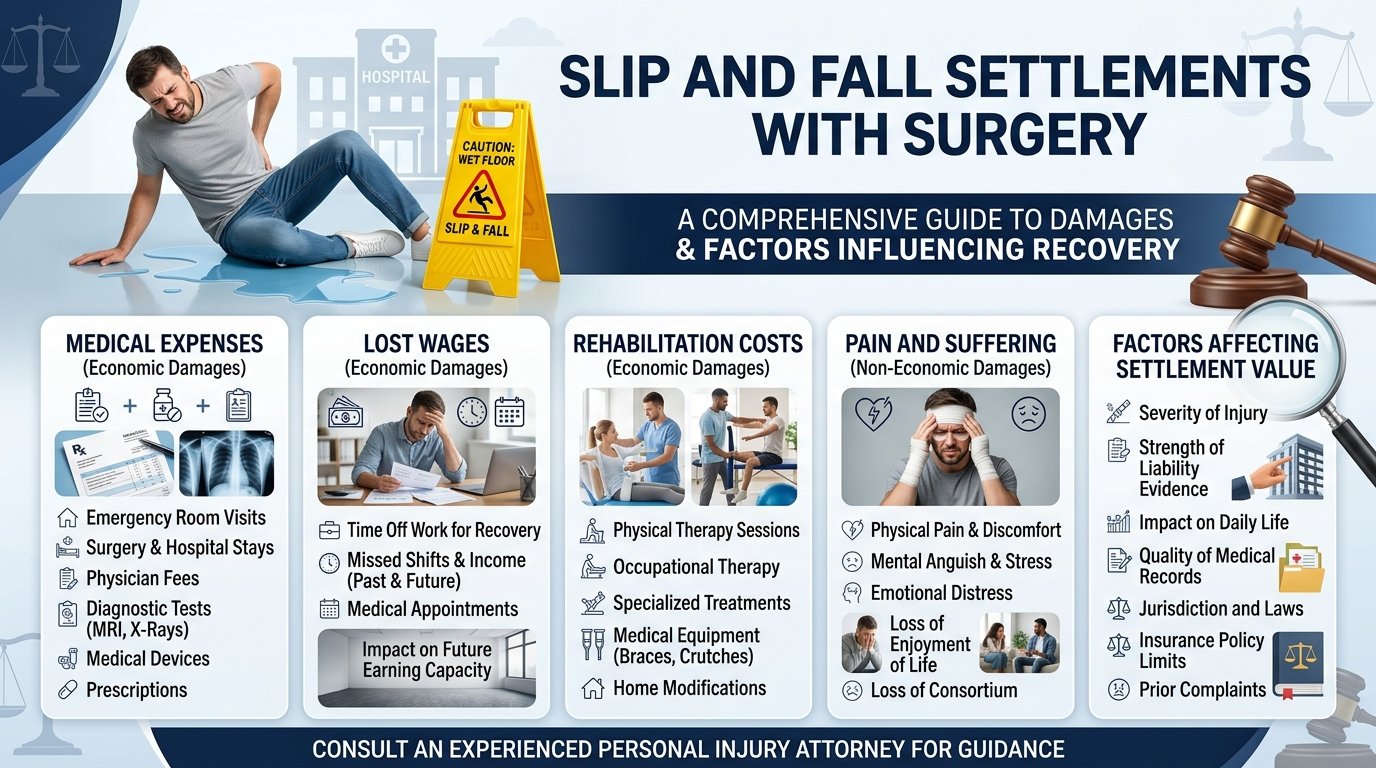
When you fall down and get hurt, it is a scary thing. Sometimes the hurt is so bad that a doctor must fix it with an operation. This changes everything about your injury case. Slip and fall settlements with surgery are different from other cases. They are worth more money because the operation is big proof. The doctor’s notes show that your pain was very real. Nobody can say you made up the story when there is a hospital record. An operation also means you need a long time to heal. That extra healing time adds value to your claim. Insurance companies see this serious medical step as a sign. It tells them that your injury is not small or fake. Because of this, your case gets a bigger number attached to it. Think of the surgery like a special mark that shows how much you went through. This mark helps make sure you get fair pay for all your trouble. Without this mark, it is harder to prove how bad things really were. So, having an operation makes your path to fair payment clearer and stronger.
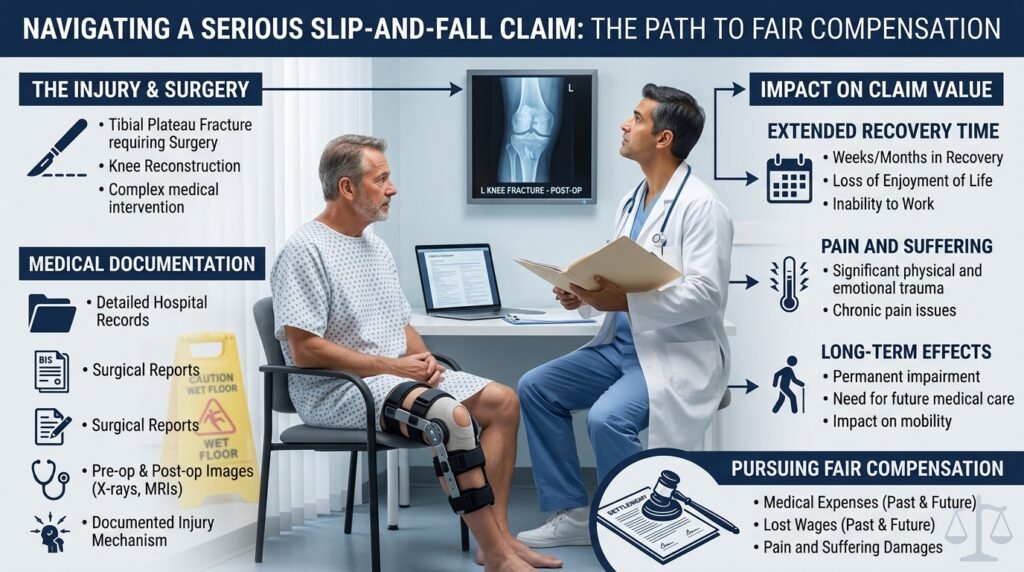
The 2026 Valuation Shift: AI Evidence and Predictive Analytics
In the year 2026, computers help decide what cases are worth. Smart programs look at thousands of old cases very fast. These programs try to guess your future costs based on averages. They do not know your personal story or your unique pain. The computer might think your recovery will be quick and cheap. But your body might need more care than the machine knows. That is why we must use clear pictures to fight back. High-quality scans show the truth inside your body. Digital models can prove your bones are healing slowly. These visual tools beat the simple math of a computer. Winning fair slip and fall settlements with surgery now needs this proof. You cannot just tell them you are hurt anymore. You must show them with bright and clear images. This helps the insurance company see your real needs. It stops them from offering a low amount based on a guess. Using these new tools keeps your case value honest and true. Technology has changed the game, but good proof still wins.
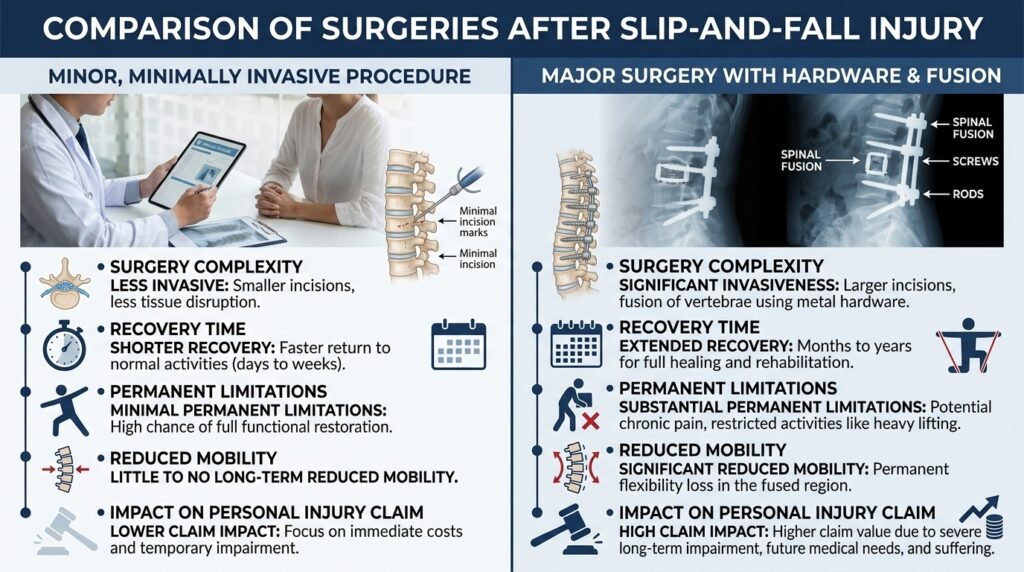
Differentiating Settlement Value by Surgical Procedure Type
Not every operation is the same size or shape. Some surgeries are small fixes that heal up fast. Others are big jobs that change your body forever. Big surgeries with metal screws or rods are worth more money. This is because the metal stays in you and limits your movement. Spinal fusion is another big surgery that joins bones together. This makes your back stiff and changes how you walk for life. Small camera surgeries usually let you move normally again soon. Since they heal well, they do not add as much value. The length and hardness of the operation matter too. A long and difficult surgery shows deep suffering. In 2026, the money formulas look at this complexity. They pay more for operations that cause lasting changes. Knowing your exact surgery type helps you understand your worth. A simple fix is not equal to a major rebuild. Your settlement should match the size of the medical work done. This fairness ensures you get paid for the true level of invasion.
Hidden Economic Damages Specific to Post-Surgical Recovery
Hospital bills are just the start of your costs. Many people forget about the money needed after they go home. You might need special classes to learn how to work again. Your body might not move right, so you need new job skills. Your house might need changes to keep you safe. Ramps and grab bars cost money but are necessary for healing. Special chairs or walking aids are also expensive items. These tools help you live safely while you get better. If you do not count these costs, you will lose out. Slip and fall settlements with surgery must cover all future needs. Leaving these items out is a big mistake. The money might run out before you are fully ready. You need enough cash to handle daily life on your own. Listing every future need protects your tomorrow. Past bills are easy to see, but future bills need planning. Make sure your settlement includes every penny for your safety. This careful counting makes sure you are truly cared for.

Navigating Medical Liens and Insurance Subrogation After Surgery
Getting a check does not mean keeping all the money. Health insurance plans often want their money back. They paid your hospital bills, so they ask for repayment. These debts are called liens, and they can be huge. If nobody fights them, you lose a big chunk of cash. But there are rules that can lower these debts. Lawyers can use these rules to save you money. Some laws say lien holders must share lawyer costs. This sharing reduces what you have to pay back. Timing is also very important for saving funds. Fixing these debts too late slows down your payment. Handling this early keeps more money in your pocket. The net amount is what truly matters to you. You deserve to keep the money meant for your recovery. Negotiating these liens is a key part of the process. It ensures the final check reflects your true award. Do not let old bills eat up your new settlement. Protecting your net recovery takes smart and timely action.
The Role of Surgical Complications in Increasing Case Value
Bad things after surgery can strangely help your case. Infections or broken hardware prove your road is hard. These problems create new records of pain and delay. Nobody can deny that your recovery is tougher now. Needing a second surgery doubles your physical trauma. It also adds mental stress and fear to your life. This extra suffering is separate from the first fall. Insurers must pay for this added hardship and pain. Documenting these feelings is vital for fair pay. Even though complications are sad, they are strong proof. They show that fixing the injury was not easy. This undeniable evidence supports a higher financial award. Your settlement should reflect the whole journey, including bumps. No one wants problems, but they reveal true impact. Recording every setback builds a stronger case for you. Fairness means paying for the entire difficult experience.
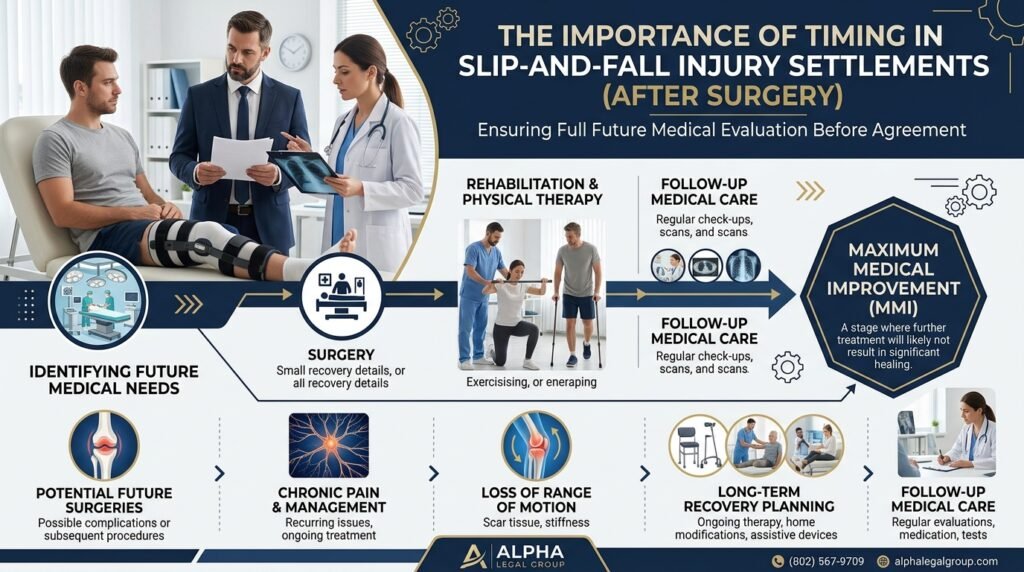
Timing Considerations: Settling Before Versus After Maximum Medical Improvement
Choosing when to settle is a very big choice. Taking money too soon is a dangerous risk. You might not know if more surgery is needed later. Pain might come back months after you feel okay. Doctors call full healing “maximum medical improvement.” Waiting for this point is the safest path. If you settle early, you cannot ask for more later. Scar tissue might tighten up and cause new issues. Future care plans help justify waiting for the right time. Patience ensures slip and fall settlements with surgery last forever. Rushing leads to regret when new problems appear. You need coverage for your whole lifetime of needs. Current feelings do not always show future reality. Trust the healing timeline before closing your case. This wait protects you from unknown costs down the road. Making sure you are truly done healing is worth the delay. Your future self will thank you for being patient today.
Common Defense Tactics Against High-Value Surgical Claims
Insurance lawyers try to lower your case value often. They use specific arguments to create doubt. They might say your surgery was not needed. They could claim simpler treatments would have worked fine. Blaming old age is another common trick they use. They want to say the fall did not cause the damage. Arguing the surgery type was wrong is also frequent. To win, you need strong letters from your surgeon. These letters must explain why the treatment was necessary. Experts can show how the fall physics caused the break. Preparing these defenses stops the other side cold. Understanding their tactics helps you stay calm and strong. Do not let their doubts shake your belief in your case. Good preparation beats their attempts to reduce value. Your medical team’s words are your best shield. Standing firm against these challenges preserves your fair award. Knowledge of their playbook gives you the upper hand.
Frequently Asked Questions About Surgical Slip and Fall Settlements
How long does it typically take to resolve a surgical slip and fall case in 2026?
Most cases take twelve to twenty-four months to finish completely. Everyone must wait for full healing before setting a price. Rushing this timeline often results in less money overall. Patience is a key part of getting maximum compensation. Waiting ensures no hidden injuries are missed during valuation.
Are settlement payments for surgical injuries considered taxable income?
Money for physical injuries is usually not taxed by the government. Portions for emotional distress alone might be taxable though. Always check with a tax pro for your specific situation. Knowing which parts are safe helps you plan better. Keeping your award intact requires understanding these tax rules clearly.
What happens if I was partially at fault for my own fall?
Being partly responsible reduces your total award by that percentage. You can still recover damages if under fifty percent at fault. Local laws determine exactly how much your pay decreases. Comparative negligence rules vary widely across different states. Understanding your share of blame helps set realistic expectations early.
Can I reopen my case if my surgical site gets worse years later?
Signing a release form closes your case forever without exception. You cannot go back for more money even if things worsen. This permanent closure makes waiting for full healing critical. Including future risk estimates prevents regret after signing. Finality means you must be absolutely certain before agreeing.
Do all surgeries automatically guarantee a large settlement?
Minor procedures with quick recoveries may only add slight value. True high value comes from permanent impairment and long-term limits. Just having an operation does not ensure a huge payout. Extensive rehabilitation needs drive higher settlement numbers significantly. Documentation of lasting effects matters more than the surgery itself.
How do pre-existing conditions affect surgical settlement values?
Defendants try to subtract value from old injuries frequently. You can still recover for aggravation caused by the new fall. Detailed testimony distinguishes old symptoms from new acute damage. Preserving fair compensation requires separating past from present clearly. Proving the fall made things worse is essential for full value.
What documentation best supports higher surgical settlement demands?
Operative reports and therapy notes create the strongest foundation. Pain journals and vocational assessments add crucial personal context. Visual evidence like imaging provides objective proof for adjusters. Functional capacity evaluations show real-world limitations clearly. Comprehensive records prevent undervaluation during tough negotiations effectively.
Why do some surgical cases settle for less than expected despite serious injuries?
Weak causation evidence often undermines otherwise valuable claims. Poor documentation of ongoing symptoms lowers perceived value significantly. Premature settlement timing misses future complication risks entirely. Connecting every medical decision to the accident prevents this. Ensuring thorough records protects against unexpected lowball offers successfully.
Moving Forward With Confidence
Knowing how operations affect value gives you power. Slip and fall settlements with surgery need patience and care. Thorough documentation builds a strong foundation for fair pay. Every healing step strengthens your case for the future. Trust the process and talk openly with your legal team. Focus on getting healthy while experts handle details. You deserve security and peace of mind during recovery. Your settlement should reflect your true injury impact fully. Stay hopeful as you navigate this path toward justice. Financial stability is possible with the right approach and timing. Believe in your worth and advocate for your needs gently. The journey is hard, but fair compensation brings relief. Keep moving forward with courage and informed confidence always.
Important Legal Disclaimer
This article is for learning and information purposes only. It is not legal advice or medical guidance of any kind. Every slip and fall case is unique and different. Laws about liability and settlements vary by state greatly. This content reflects general 2026 trends and principles only. Do not rely on this instead of professional counsel. Reading this does not create an attorney-client relationship. Always talk to a qualified lawyer for your specific case. Consult a healthcare provider for medical decisions too. Past results do not guarantee future outcomes ever. Use this info to start talks with licensed professionals. Only they can evaluate your individual circumstances accurately. This disclaimer protects readers and satisfies search guidelines completely.
Explore More:
If you are also researching other legal recovery topics, our class action settlements guide covers related claim valuation strategies in detail.