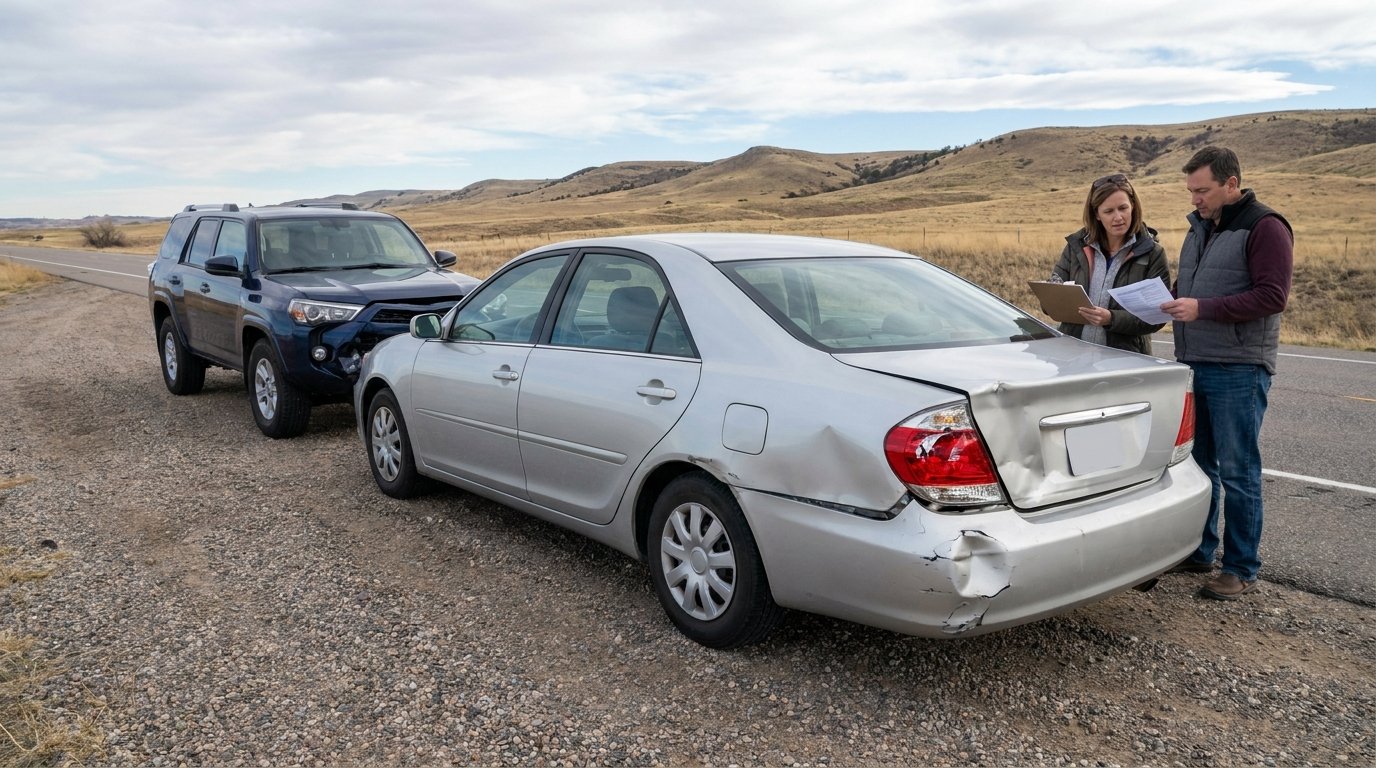
Written and researched by Kevin Tookes for settlemateapp.com
Colorado car accident settlements depend on your injuries, the evidence, who caused the crash, and the insurance available. A settlement is an agreement to resolve a claim, rather than a verdict reached at trial. Before accepting one, you need to understand both what the payment covers and which rights you are giving up.
The most useful question is not simply, “What do other people receive?” It is whether an offer reflects your own losses and how much will remain after deductions.
Quick Facts
| Question | Colorado rule or practical answer |
|---|---|
| Who pays? | The at-fault driver’s liability coverage generally pays covered losses, up to its limits. |
| Minimum liability insurance | $25,000 per injured person, $50,000 for all injuries per accident, and $15,000 for property damage. |
| What happens with shared fault? | Compensation is reduced by your fault; in a typical two-driver case, 50% or more bars recovery. |
| Usual motor-vehicle lawsuit deadline | Three years after the claim legally arises, with important exceptions. |
| Is there a guaranteed payout? | No. A policy limit or damages cap is not a promised settlement. |
What Is the Average Car Accident Settlement in Colorado?
I could not verify a representative statewide average from the sources reviewed. Some websites publish averages based on law-firm figures, while others offer injury ranges or selected case results. Those methods do not establish what a typical Colorado claimant receives.
A published settlement may also include losses very different from yours. Someone who needs future treatment or cannot return to work has a different claim from someone who recovers fully. The evidence must connect those losses to the accident.
Treat online Colorado car accident settlement amounts as examples to investigate, not a price list. A large verdict, a negotiated settlement, and the amount a person takes home are not interchangeable figures.
How Colorado Car Accident Settlements Are Calculated
A useful starting point is to separate financial losses from the personal effects of an injury. Economic damages can include reasonable medical expenses, lost earnings, reduced future earning ability, and other supported costs. Future losses need evidence too, rather than a guess about what might happen.
Non-economic damages cover harm such as pain, emotional stress, and reduced enjoyment of life. Colorado also recognizes physical impairment and disfigurement as a separate category. The same loss cannot be counted twice under different labels.
Build a file containing treatment records, bills, wage information, photographs, and relevant witness details. Describe specific changes to daily life rather than relying only on a diagnosis. Do not confuse your injury claim with class action settlements advertised as requiring no proof; evidence of your own damages remains essential.
How Shared Fault Changes Your Recovery
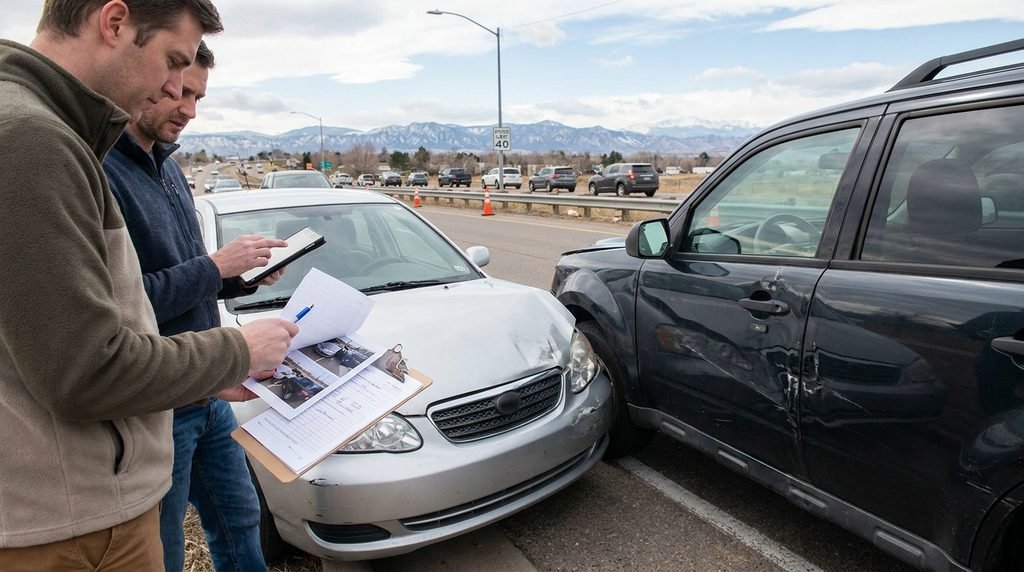
Colorado uses modified comparative negligence. In a typical claim against another driver, you can recover only when your share of fault is lower than theirs. Your damages are then reduced by your percentage of responsibility.
For a hypothetical example, assume damages of $80,000 and fault of 20%. The fault adjustment leaves $64,000 before coverage restrictions, fees, and other deductions. At 50% fault in that two-driver example, recovery is barred. An insurer’s proposed fault percentage is therefore worth checking against the evidence, not accepting without explanation.
Which Damage Cap Applies in 2026?
Colorado’s general non-economic damages cap is $1.5 million for qualifying claims that legally arise on or after January 1, 2025. The law also covers qualifying civil actions filed during 2025. This is a limit on certain damages, not an estimate of your case’s value.
The dates matter: filing an older accident case in 2026 does not, by itself, establish that the higher cap applies. Ask a Colorado attorney to check when the claim legally arose and which rules govern it. The new cap’s inflation adjustments begin January 1, 2028, not in 2026.
This cap does not limit economic damages, and the statute separately protects compensation for physical impairment or disfigurement from this particular restriction. Wrongful-death and government-related claims have their own rules. Do not use $1.5 million as a ceiling for every part of every accident claim.
Why Insurance Coverage Matters
A strong claim and enough insurance to pay it are different things. The minimum bodily-injury limits shown above can leave a gap when several people are injured or one person has major losses. A per-accident limit is shared across covered injury claims, not available in full to each person.
Check your own policy as well. Uninsured/underinsured motorist coverage, often called UM/UIM, may cover eligible injury losses when the responsible driver has no insurance or insufficient insurance. Colorado policies include this coverage unless it is rejected in writing.
Medical payments coverage, or MedPay, can pay covered medical expenses regardless of fault. Colorado generally includes $5,000 unless the policyholder rejects it. Check the actual policy and coverage selections rather than assuming these protections are available.
How Long Does Settlement Take, and What Are the Deadlines?
The process usually involves documenting the crash and injuries, assessing losses, sending a settlement demand, and negotiating. There is no reliable timetable for every case. Continuing treatment, disputed responsibility, missing records, or a lawsuit can affect the timing.
Understanding future medical needs matters before signing a final release, but waiting must not put your filing deadline at risk. Colorado generally allows three years for motor-vehicle injury and property-damage lawsuits after the claim legally arises. An open insurance claim is not a substitute for filing a lawsuit on time.
Some claims need faster action. Wrongful-death claims generally have a two-year deadline, subject to exceptions. Claims covered by the Colorado Governmental Immunity Act generally require written notice within 182 days after discovering the injury. Get individual advice promptly when a death, public vehicle, or government employee is involved.
How Much of the Settlement Do You Keep?
The settlement total is the gross amount; your net payment is what remains after applicable deductions. These may include attorney fees, case expenses, unpaid treatment bills, and valid medical repayment claims. Colorado’s contingency-fee rules require a written closing statement showing the recovery and disbursements.
For illustration only, a $60,000 settlement minus a hypothetical $20,000 legal fee, $2,000 in case costs, and $8,000 in medical repayments leaves $30,000. This is an arithmetic example, not an average settlement or a standard legal fee.
Ask for an itemized calculation before accepting an offer. Medicare, for example, may recover accident-related payments it made while another payer’s responsibility was unresolved. Check repayment demands carefully, including whether the listed treatment actually relates to the accident.
Before You Accept an Offer
Ask for a clear explanation of any disputed medical bills, lost income, or fault percentage. Compare the offer with your documented losses and future needs, not just another person’s result. When a serious injury, coverage question, or repayment demand remains unresolved, get a Colorado attorney’s assessment before giving up your claim. Request the expected deductions in writing so your decision is based on the likely net payment.
How This Was Researched
I, Kevin Tookes, reviewed seven competing guides and checked Colorado legislation, published statutes, insurance guidance, court instructions, and federal tax and Medicare information. I compared the published payout claims but could not verify a representative statewide average. This article focuses on the gaps between headline figures, date-sensitive legal rules, and the money someone actually receives.
Accuracy Note
This article uses publicly available legal and insurance information checked on September 12, 2026, and provides general information, not individual legal advice. Claim dates, policy terms, and exceptions can change the outcome; please report outdated or incorrect information so it can be reviewed.
FAQ
Can I settle a Colorado car accident claim without a lawyer?
Yes, although getting legal advice is particularly useful when injuries are serious, responsibility is disputed, or repayment claims are involved. Compare the proposed fee agreement with the help needed; representation does not guarantee a particular result.
Are Colorado car accident settlements taxable?
Compensation for personal physical injuries is generally excluded from federal taxable income. Interest and punitive damages are generally taxable, and previously deducted medical expenses can create exceptions. A tax professional should review the settlement’s individual parts.
Can I claim for pain and suffering without surgery?
Surgery is not a requirement in Colorado’s general damages instructions. What matters is supported evidence of the harm, its connection to the accident, and its effect on your life, subject to the applicable legal limits.
Can I reopen a claim after accepting a settlement?
A valid final release generally ends the claims it covers, even when later problems appear. Before signing, check which people, insurers, and claims are being released, and whether future treatment has been considered. Any possible exception needs individual legal review.
Is payment immediate after a settlement agreement?
Not necessarily. Signing documents, receiving the insurer’s payment, and resolving repayment claims are separate steps. Ask what remains outstanding and when your net payment is expected, rather than assuming agreement means immediate cash.
Written and researched by Ubaid, contributor at ybrmagazine.com.
Explore More:
Class Action Lawsuits No Proof Required: How They Actually Work