.3125 as a Fraction: The Answer Is 5/16 (Steps, Check, and Common Mix-Ups)
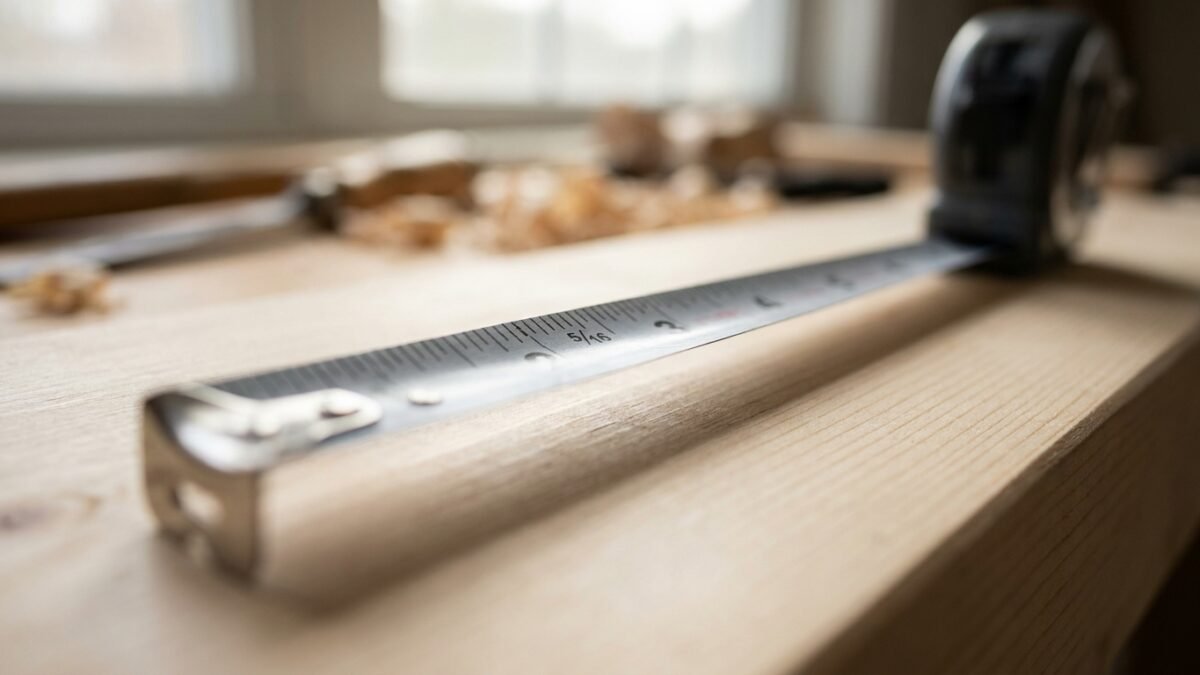
The decimal .3125 as a fraction is 5/16. Before it is reduced, the same value is written 3125/10000, and dividing the top and bottom by 625 gives the simplest form. If you only needed the answer, you can stop here, but the steps below show why 5/16 is correct, how to prove it in a few seconds, and why several popular calculator pages on this topic disagree with each other.
How to convert .3125 to a fraction, step by step
Start by counting the digits after the decimal point. There are four (3, 1, 2, 5), so the last digit sits in the ten-thousandths place. That tells you the fraction has a denominator of 10,000, and the digits themselves become the numerator. Written out, .3125 is 3125/10000, which reads as “3,125 ten-thousandths.”
That fraction is correct but clumsy, so the next job is to reduce it. You do this by dividing both numbers by their greatest common factor. For 3125 and 10000 that factor is 625. Dividing 3125 by 625 gives 5, and dividing 10000 by 625 gives 16. The result is 5/16, and since 5 is prime and does not divide 16, nothing more can be cancelled.
If you do not spot 625 right away, you can reach the same answer in smaller bites. Both numbers end in 0 or 5, so divide by 5 repeatedly: 3125/10000 becomes 625/2000, then 125/400, then 25/80, and finally 5/16. It takes four rounds instead of one, but every step is easy mental arithmetic, and it works even when the greatest common factor is not obvious.
Why the greatest common factor is 625
Breaking the numbers into prime factors explains the 625. The numerator 3125 is 5 multiplied by itself five times (5⁵). The denominator 10000 is 10⁴, which splits into 2⁴ × 5⁴, or 16 × 625. The two numbers share four fives, and four fives multiplied together make 625. After you remove them, the numerator keeps one leftover 5 and the denominator keeps the 2⁴, which is 16.
This also tells you something useful about the decimal itself. Any decimal that ends cleanly can be written with a denominator made only of 2s and 5s, and here the denominator ended up as a pure power of 2. That is why .3125 lines up so neatly with sixteenths, and it is the reason this value appears constantly in measuring and machining.
Two quick ways to check that 5/16 is right
The first check is plain division. Divide 5 by 16 on any calculator and you get 0.3125 exactly, with no rounding and no repeating digits. If your division returns the starting decimal, the fraction is correct.
The second check works without a calculator and relies on one fact worth remembering: 1/16 equals 0.0625. Five of those add up to 0.3125, because 0.0625 × 5 is 0.3125. You can also reason with quarters and halves. A quarter is 0.25, and 5/16 is a quarter plus one more sixteenth (0.25 + 0.0625), which lands on 0.3125 again.
Mix-ups that cause wrong answers
The most damaging error is the claim that .3125 equals 1/4. One page that ranks for this search states exactly that, but 1/4 is .25, and the gap between the two is 0.0625, a full sixteenth. Using 1/4 in place of 5/16 would make any measurement or calculation noticeably off.
A second source of confusion is the whole number in front. Several pages that look like they answer this question actually answer a different one, because 3.125 (with a 3 in front of the point) is 25/8, which is a mixed number, 3 1/8. The digits 3125 are the same, but the place values are not. In the same way, 1.3125 is 21/16, or 1 5/16, because the whole number simply sits beside the fraction.
A third slip happens when people stop at 3125/10000 and call it done. That fraction is not wrong, but most teachers, exam questions, and measuring tools expect the simplest form. If a problem says “write in lowest terms,” 5/16 is the only accepted answer.
What .3125 looks like as a percent and a ratio
Moving the decimal point two places to the right turns .3125 into 31.25%. That means 5/16 of something is just under a third of it, since a third would be about 33.3%. As a ratio, you would write it 5:16, meaning five parts out of sixteen in total.
If you are converting going the other direction, the habit that saves time is to divide by 100 first. Reading 31.25% as 31.25/100 and clearing the decimals gives 3125/10000 again, which leads you back to the same reduced fraction.
Where you will actually meet 5/16
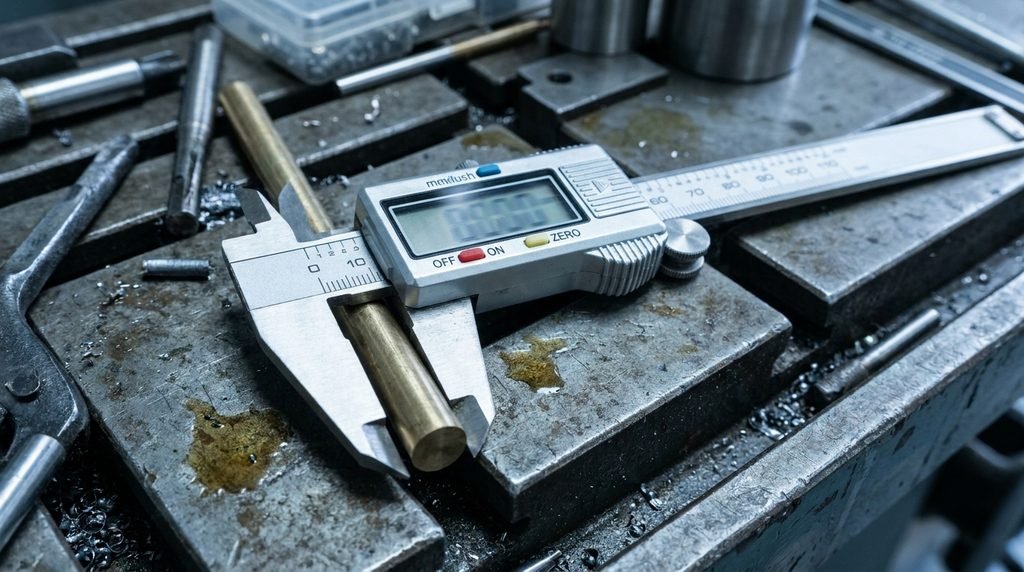
Because 5/16 is a sixteenth-based fraction, it is common wherever inches are used. On a tape measure or ruler, it is the fifth small mark after a whole-inch line, sitting between the 1/4-inch mark and the 3/8-inch mark. In decimal form, 5/16 of an inch is 0.3125 inches, which is how it often appears on calipers, drill charts, and engineering drawings.
In metric terms, 5/16 inch converts to 7.9375 millimeters, since one inch is defined as exactly 25.4 millimeters. That is very close to 8 mm, which is why a 5/16 socket or bolt and an 8 mm one are easy to confuse, but they are not identical. The difference is only about 0.06 mm, small enough that the wrong one may feel loose or round off a bolt head rather than failing outright.
A short chart of sixteenths in decimal form
Seeing .3125 beside its neighbors makes it easier to remember. The odd sixteenths are the ones that cannot be simplified, so they are the ones worth learning.
| Fraction | Decimal |
|---|---|
| 1/16 | 0.0625 |
| 3/16 | 0.1875 |
| 5/16 | 0.3125 |
| 7/16 | 0.4375 |
| 9/16 | 0.5625 |
| 11/16 | 0.6875 |
| 13/16 | 0.8125 |
| 15/16 | 0.9375 |
Each step down the chart adds 0.125, which is 1/8, so once you know one entry you can rebuild the rest. Starting from 0.1875 for 3/16, adding 0.125 gives 0.3125 for 5/16, and adding it again gives 0.4375 for 7/16.
Questions readers often ask
Is .3125 a rational number?
Yes. Any decimal that ends after a fixed number of digits can be written as a fraction of two whole numbers, and 5/16 is one such fraction.
Is 5/16 bigger or smaller than 1/3
It is slightly smaller. A third is about 0.3333, while 5/16 is 0.3125, so 5/16 falls a little short of it.
Does it repeat?
No. Because the denominator 16 is a power of 2, the decimal ends exactly. Fractions with denominators like 3, 7, or 9 are the ones that produce repeating decimals.
What about 0.03125?
That is a different number, exactly one tenth the size of .3125, and it equals 1/32.
The short version to remember
So, .3125 as a fraction is 5/16, reached by writing 3125/10000 and dividing both parts by 625. If you keep one thing, keep 1/16 = 0.0625, because five of them rebuild the decimal and let you sanity-check the answer anywhere, with or without a calculator.
EXPLORE MORE: Coca-Cola Beverages Northeast Lawsuit: What the EEOC Case Is About and Where It Stands (November 2026)
Related Posts
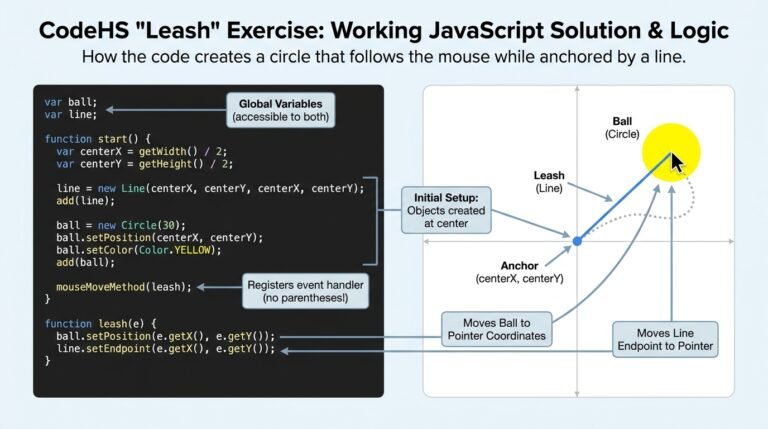
Leash CodeHS Answers: Working JavaScript Code and How It Works
If you are hunting for leash codehs answers, the short version is that this exercise is a JavaScript…

Barbeglue Explained: What It Is, Where It Goes, and How Much Heat It Can Take
Barbeglue is the trade name of a one-part adhesive made for the Italian barbecue maker Sarom, and it…
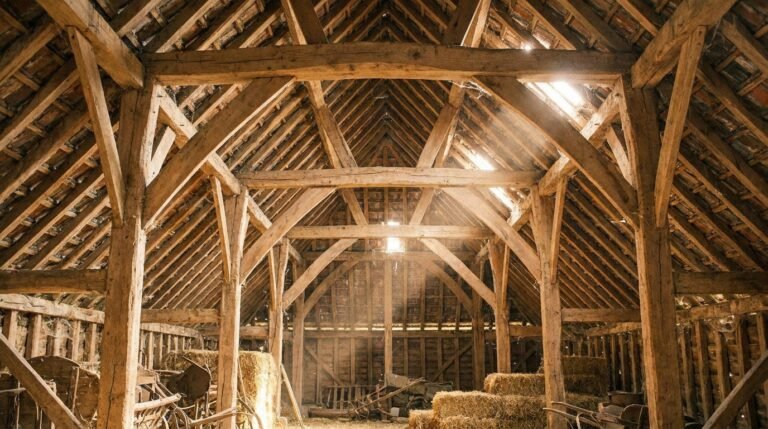
Windstrebe: What It Is, Where It Sits in a Roof, and How It Differs From a Windrispe
A Windstrebe is a diagonal timber brace that stops a roof frame from leaning or racking sideways when…
1 Comment