Barbeglue Explained: What It Is, Where It Goes, and How Much Heat It Can Take
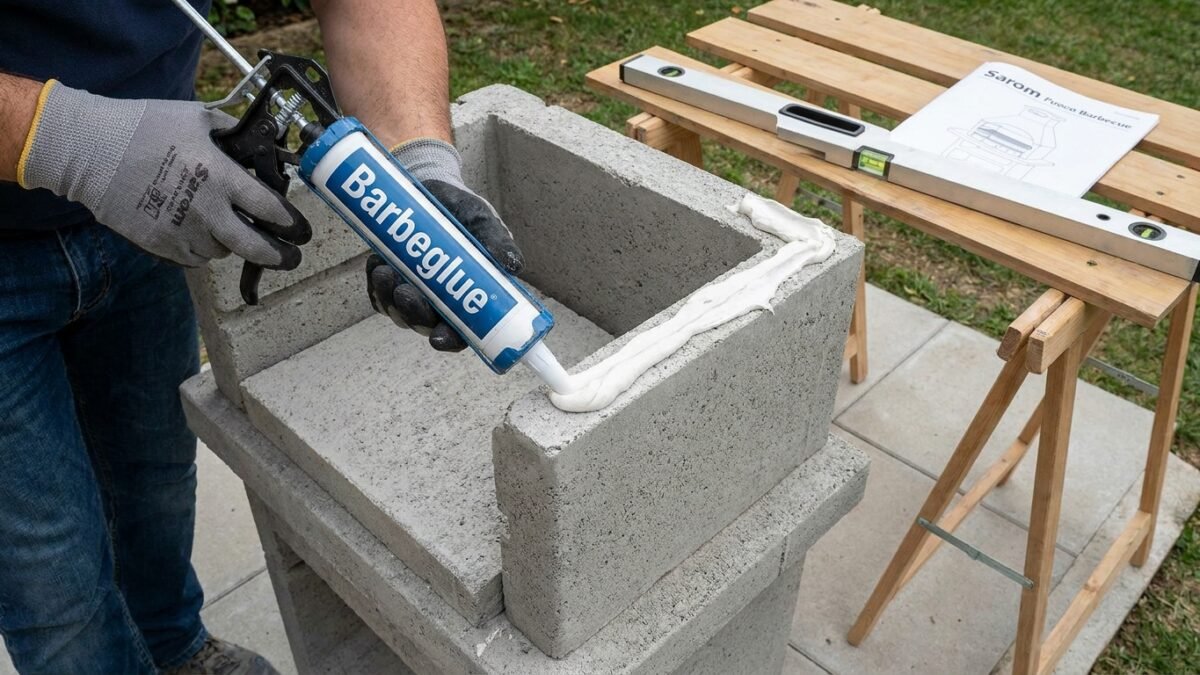
Barbeglue is the trade name of a one-part adhesive made for the Italian barbecue maker Sarom, and it is meant for joining the concrete pieces of the company’s garden barbecues. It comes in a 290 ml cartridge, hardens by taking moisture from the air, and appears by name in Sarom’s own assembly manual as one of two approved ways to hold a barbecue together. Most people who search for this word arrive from a manual, a kit box, or a typo, so this guide starts with the practical questions: what the product really is, how it differs from the unrelated barge glue that search engines keep suggesting, and what its published limits are.
Is barbeglue the same as barge glue?
No, and this is the most common mix-up. Barge cement is a rubber-based contact cement that shoemakers, leather workers and costume makers have used for decades, usually bought in tins or tubes and spread with a brush. Hobbyist forums describe it as a glue for boots, belts and leather repairs, and one leather supplier states that it cannot ship the product to California because of state rules on volatile organic compounds.
The product discussed here belongs to a different family altogether. According to Sarom’s technical data sheet, it is free of solvents and isocyanates, and its safety data sheet lists a volatile organic compound content of 0.90 percent. If a shop assistant offers you barge cement for a concrete barbecue, that is the wrong tin.
What is actually inside the cartridge
Sarom’s data sheet, which carries the product code Isocoll ECO 6056, describes the material as a one-part silyl-terminated polymer adhesive-sealant. Once squeezed out, it reacts with humidity in the air and turns into an elastic solid. Shops often group this chemistry under names like hybrid or modified-silane sealants. The sheet also lists it as odourless, resistant to weather and ultraviolet light, and paintable once cured.
The numbers published by the maker are collected below. They come from the data sheet dated March 2021 (version 4), which was the newest version I could find.
| Property | Published value |
|---|---|
| Form and colour | White or grey paste |
| Surface-dry (tack-free) time | 30 minutes at 23°C and 50% humidity |
| Curing speed | About 3 mm per 24 hours |
| Hardness | Shore A 45 |
| Tensile strength | 2.10 N/mm² |
| Elongation at break | About 400% |
| Application temperature | +5°C to +50°C |
| Temperature resistance | −40°C to +100°C |
| Packaging | 290 ml cartridge, 12 per box |
| Shelf life | 24 months sealed, stored at 5–25°C |
The elongation figure is the one that matters most for a barbecue. A joint that can stretch to several times its original length will follow a concrete block as it warms and cools, instead of cracking along the seam. The curing speed also deserves attention: at 3 mm per day, a thick bead needs more than a day to harden all the way through, even though the surface skins over in about half an hour.
Where Sarom tells you to use it
The manual for Sarom Fuoco barbecues says to join the elements during assembly with a special glue, naming Barbeglue as the example, or with refractory mortar, for which it names Sarom’s own Malta Refrattaria. Each piece should be checked with a spirit level as it goes on. When the hearth comes in three parts, the grill is slotted between the two side pieces, the joints are glued, and you wait for the bond to harden before carrying on.
The instructions also cover the finishing stage. After the glue goes on, a metal corner bracket is fixed with its screws and the assembly is left for 15 minutes. The worktop is then aligned with the body and treated the same way, with glue and a bracket. The manual stresses that the barbecue should stand on a solid, level concrete base sized to fit it.
Sarom also sells the glue inside an assembly kit. A French retailer’s listing for the kit describes a 5.5 kg pack containing the glue, a bucket of white render, a roller and a sponge, aimed at concrete barbecue pieces that will face weather and temperature swings. The same retailer sells the cartridge alone, labelled as special barbecue glue for outdoor use.
How to apply it, step by step
The order below combines Sarom’s assembly manual with the application advice on the data sheet. Your own model’s manual and numbered diagram always come first.
- Prepare a flat, solid concrete base that matches the barbecue’s footprint, and confirm it is level.
- Make sure the surfaces to be joined are clean and dry, with no oil, grease, dust or rust, because the data sheet says these reduce adhesion.
- Work when the air is between 5°C and 50°C, which is the stated application range.
- Load the cartridge into a manual or pneumatic caulking gun.
- Lay the glue on the contact faces and set each element in the order shown by the numbers on your model’s diagram.
- Check every piece with a spirit level before moving to the next.
- Fit the corner bracket and screws, and wait 15 minutes, then repeat for the worktop.
- Leave the joints to cure fully before lighting a fire or painting. If you plan to paint, test a small area first, since the data sheet warns that some paints and varnishes may dry more slowly over it.
How hot can a barbeglue joint get?
The only temperature limit I found in Sarom’s published papers is the data sheet’s range of −40°C to +100°C. That is well above summer sun on a concrete block but far below the heat of a charcoal bed. Sarom’s manual still names the product for hearth pieces, so the practical reading is that it holds structural joints between elements, not that it is a fire cement. I could not find a higher figure from the company, so if a joint on your model sits right at the firebox, asking Sarom directly is the safest route.
Other makers set different rules, which shows why you should not swap instructions between brands. A manual for Sunday barbecues, for example, asks for a high-elasticity masonry adhesive rated to at least 200°C, and it forbids high-strength or fast-setting cements such as white cement, aluminous cement or tile adhesive. Its stated reason is that these rigid materials stop the pieces from expanding with heat, which builds up stress inside the structure. Sarom’s Italian text likewise warns against high-strength, rapid-setting cements.
Why “silicone” is the wrong word
Some retailers describe the product loosely as a barbecue silicone. One shop even names the data sheet file that way. The data sheet itself calls it a silyl-terminated polymer, which is a different material, and the English warning box in Sarom’s assembly manual says in capitals not to use silicone glue or non-refractory mortar. Treat “silicone” in a shop listing as shorthand, and do not buy a general-purpose bathroom silicone as a substitute.
Safety and storage
Under European labelling rules, the safety data sheet (revision 6, September 2021) does not classify the mixture as hazardous. It does contain a small share, under 2 percent, of trimethoxyvinylsilane, which on its own is a flammable liquid that is harmful when inhaled. For that reason the sheet recommends good ventilation, work gloves, sealed safety goggles and long sleeves, and it asks users to keep the product away from heat, sparks and open flames while handling it. The flash point is above 60°C, and the product is not treated as dangerous goods in road, rail, sea or air transport.
Keep the cartridge in its original packaging in a cool, dry place, away from heat sources. Skin that touches fresh glue should be washed with plenty of water, and the sheet advises avoiding contact with the uncured product altogether.
Where barbeglue is sold
Everything I found points to the European market. The cartridge and the assembly kit are listed by a French home-improvement retailer, and another French retailer hosts the safety data sheet. Sarom itself is based in Orsago, in the province of Treviso, and the retailer listing describes the company as Italian, founded in 1945, and specialised in concrete solutions and barbecue equipment. I found no confirmed listing outside Europe, and prices vary between shops and change often, so check the current figure on the retailer’s page.
The short version
For anyone holding a Sarom manual, barbeglue is simply the approved adhesive for the concrete parts, applied to clean dry surfaces, levelled piece by piece, and left to cure before use. Its published ceiling of 100°C and its slow cure are the two facts worth remembering, and the name has nothing to do with leather-working barge cement.
Disclaimer: this article summarizes manufacturer documents available at the time of writing and is not a substitute for the manual and safety data sheet supplied with your product. Follow the instructions for your exact barbecue model.
EXPLORE MORE: Phoenix Settlement Administrators: Who They Are and How to Check a Notice or Check
Related Posts

Leash CodeHS Answers: Working JavaScript Code and How It Works
If you are hunting for leash codehs answers, the short version is that this exercise is a JavaScript…
Windstrebe: What It Is, Where It Sits in a Roof, and How It Differs From a Windrispe
A Windstrebe is a diagonal timber brace that stops a roof frame from leaning or racking sideways when…

Kingddy Com: What This Website Is, Who Runs It, and How to Read Its Content
Kingddy com is a general-interest website that publishes articles on technology, finance, business, health, travel and a handful…
1 Comment