digitalinside. tech: What the Site Is Today and What Older Pages Get Wrong
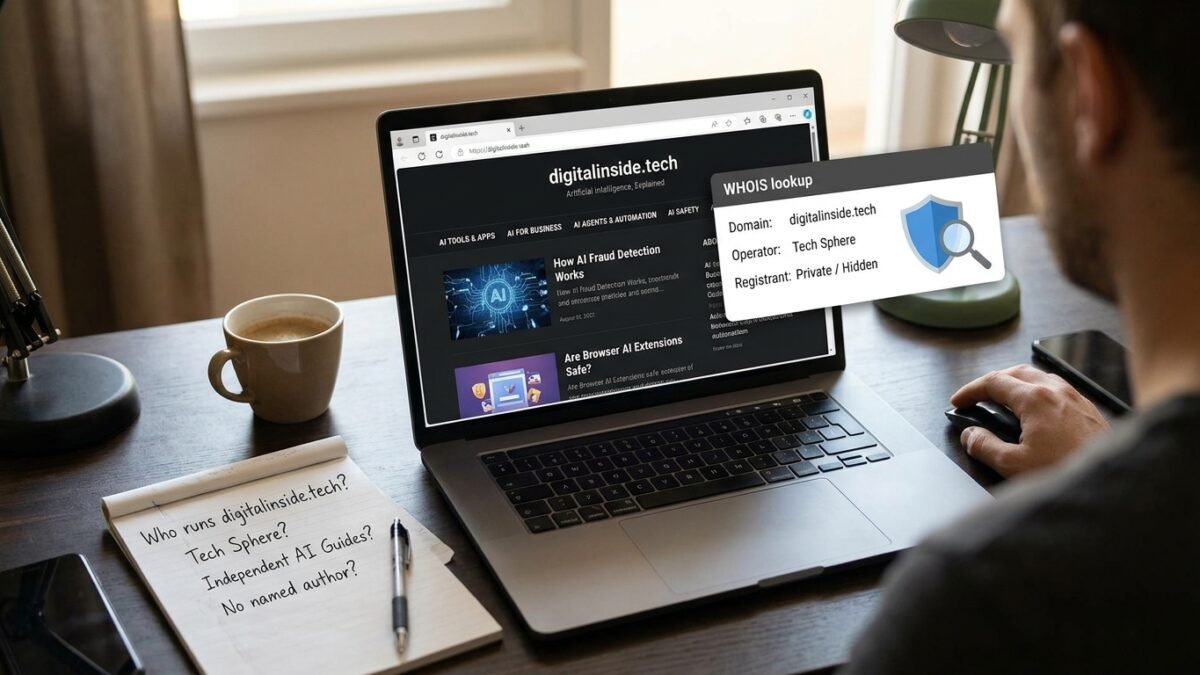
If you have searched for digitalinside. tech, you probably want to know one of two things: what the site actually is, and whether it can be trusted. The short answer, based on pages read in November 2026, is that it is a WordPress-based blog that presents itself as an independent publication about artificial intelligence, with guides, tool reviews and explainers. What it does not do is name a person or a registered company behind the work, which is why so many third-party pages describe it vaguely or get it wrong.
That second point matters because some pages written about the site describe it as a mystery with no known content. That description is out of date. The live site has a clear editorial focus, a visible set of policy pages, and a steady stream of recent posts. Where it falls short is on ownership, and that gap is worth understanding rather than either ignoring or exaggerating.
What you will find on the site today
The homepage describes the project as independent AI guides, reviews and explainers, with the tagline “Artificial intelligence, explained”. Its menu is organised around six topic areas: AI tools and apps, AI for business, AI agents and automation, AI marketing and SEO, AI safety and security, and a beginner section called Learn AI. The category pages show counts in the high teens to mid twenties for five of these areas, and the homepage says there are more than 130 guides in total, a figure the site gives about itself and that I could not check against an independent count.
The posts I could see were dated in October 2026, with the newest on 25 October. Titles lean practical and cautious rather than promotional. Examples include a guide on how AI fraud detection works and why it produces false alarms, a piece on whether browser AI extensions are safe, one on using AI responsibly as a freelance writer, and one on choosing between chatbots based on task fit, privacy, pricing and integrations. That emphasis on limits and risks is a useful clue about the intended reader: someone who wants to use AI tools at work without being oversold on them.
A note on timing helps here. Pages like this change often, and the homepage states that new articles appear weekly. Anything described above reflects what was visible when the pages were read, so a visit today may show newer posts or reorganised categories.
How the site has changed over time
The earliest content I could find on the domain looks quite different from what is there now. A blog archive page lists posts with a date of 22 June 2023, and the titles were about general software and apps: deep learning for image recognition, mobile payment apps, project management software for small businesses, accounting software for freelancers, and app update analysis. Compared with today’s AI-only focus, that reads like a broader consumer technology blog.
There is an unexplained detail in this history. One third-party WHOIS snapshot lists the domain’s creation date as 6 August 2023, which is later than that June 2023 post date. Possible explanations include a re-registration, a migration of old content from another address, or posts that were backdated, but none of these is confirmed anywhere I could find. It is a good example of why a single automated report should not be treated as the full story, and I would not build any conclusion on either date alone.
Who runs digitalinside. tech?

This is the part that remains genuinely open. The terms and conditions page names “Tech Sphere” as the operator of the website, while the current pages use the name DigitalInside, including in the copyright line. The About page describes an “editorial team” but does not name any editor, writer or company, and the only listed contact is a general email address on the site’s own domain. The domain’s registrant details were hidden behind a privacy service in the WHOIS snapshot I saw, which is a routine option offered by registrars and not a sign of wrongdoing in itself.
No independent news coverage, company registration record or public statement from either name turned up in my research. That does not mean the operator is hiding anything sinister. Many small blogs are run by individuals or tiny teams who never seek press attention. It does mean that statements such as “100% original, human-checked”, which appears on the homepage, are the site’s own claims and cannot be confirmed from outside.
What the site says about itself, and what that is worth
The editorial policy is short but specific, and it is worth reading directly because it sets expectations you can hold the site to. Below is how its main commitments compare with what a reader can actually verify.
| Commitment on the site | Can a reader check it? |
|---|---|
| Editorial independence from companies covered | Not directly; only visible through patterns in recommendations over time |
| Claims checked against primary sources | Partly; look for whether posts name official documentation |
| Dates shown and articles revisited | Yes; check “last updated” labels on a few older posts |
| AI-assisted research and editing allowed, with human approval | Disclosed, but the extent of AI use is not measurable from outside |
| Advertising present and kept separate from editorial content | Yes; ads are visible, and separation can be judged by eye |
Two points deserve attention. First, the policy openly says AI tools may be used in research and editing, which is a more honest statement than many sites make, though it leaves the real degree of AI involvement unknown. Second, the site discloses that it runs advertising, so traffic matters to its business model. Neither fact is a flaw on its own. Together they suggest that the sensible approach is to treat its guides as a starting point and confirm important details, especially on security or money, against the official documentation of the tool being discussed.
Why searches for this name bring up other companies
The name is close to several unrelated projects, and mixing them up is the most common mistake in articles about this keyword. A German consumer-technology magazine called inside digital says it has covered everyday digital life since 2003. A Utrecht-based SEO agency called Digital Inside appears in business directories. Separate domains such as digitalinside.xyz and digitalinside.io also exist and show up in website-technology lookup tools, and I found nothing connecting them to the .tech site.
The practical lesson is to anchor on the exact address. A review, complaint or praise that does not name the full domain may be about a different organisation altogether. The same caution applies to directory-style pages that merge these names into a single profile.
Is digitalinside. tech safe and legitimate?
No public warnings, scam reports or blocklist entries turned up in the sources I reviewed. An automated checker snapshot reported no active user-reported threats, though that page was dated and automated “worth” or “income” figures on such sites are guesses rather than audited numbers. Positive signals are modest but real: it has a coherent topic focus, a working contact route, privacy and legal pages, and a published editorial policy. The missing piece is a named, verifiable operator.
For ordinary reading, that is a low-risk profile. The sensible limit is the same as for any lesser-known site: do not hand over payment details or reuse a password until you can identify who you are dealing with. Note that the privacy policy page I viewed still contained template wording such as “suggested text”, which suggests the legal pages were not fully customised, and that is a reason for a little extra care before sharing personal data through any form.
How to check a site like this yourself
A few free checks answer most questions in a few minutes and work for any website. Look up the domain on a WHOIS service run by a registry or ICANN and note the creation and expiry dates. Open the Internet Archive’s Wayback Machine to see how the pages looked in earlier years, which would also help settle the date puzzle described above. Read the About, Contact and policy pages for a named operator, and confirm the browser shows a valid secure connection before entering any information. Finally, test a few claims in its articles against the official documentation they refer to, since that tells you more about reliability than any rating page.
Questions readers ask
Is the .tech address a sign of a professional technology company?
Not by itself. The .tech extension is operated by Radix and is aimed at technology audiences, but registration is open, so it says who the domain was designed for rather than who owns it.
Does the site charge for anything?
Nothing on the pages I read pointed to a paid product, and the editorial policy says the site is supported by advertising. Pricing information can change, so check the live pages if this matters to you.
Can I use its guides for work decisions?
They are written for general readers and the site’s own footer says content is for information only. For anything involving compliance, security settings or spending, use them to learn the questions to ask and then confirm details with the tool’s vendor or a qualified professional.
How can I contact the site?
The About, Editorial Policy and Contact pages all list a general email address at the site’s own domain, and no phone number or postal address appeared.
The bottom line on digitalinside. tech
Based on its live pages, digitalinside. tech is an actively updated AI-focused blog with a defined purpose and visible policies, not an empty or unexplained domain. What stays unconfirmed is the identity behind it, the relationship between the names Tech Sphere and DigitalInside, and the timeline of its earlier content. Read it as you would any independent blog: useful for orientation, worth cross-checking on anything important, and best judged by the accuracy of what it publishes over time.
Disclaimer: This article is general information based on publicly available pages reviewed on 13 November 2026. Site content, ownership and registration details can change, so confirm anything important yourself. It is not security, legal or financial advice and is not affiliated with the site or its operator.
Explore More
Can I Get Qugafaikle5.7.2? What the Evidence Shows Before You Download Anything
Related Posts
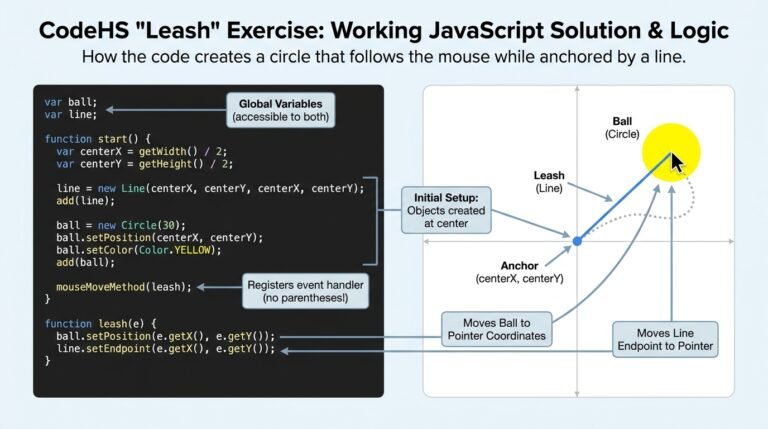
Leash CodeHS Answers: Working JavaScript Code and How It Works
If you are hunting for leash codehs answers, the short version is that this exercise is a JavaScript…

Barbeglue Explained: What It Is, Where It Goes, and How Much Heat It Can Take
Barbeglue is the trade name of a one-part adhesive made for the Italian barbecue maker Sarom, and it…

Windstrebe: What It Is, Where It Sits in a Roof, and How It Differs From a Windrispe
A Windstrebe is a diagonal timber brace that stops a roof frame from leaning or racking sideways when…