
Life can change very fast. One day you are fine. The next day you are hurt. This happens when a doctor makes a big mistake. You go to the hospital to get help. But instead, you leave with new pain. This is a scary time for any family. It is hard to know what to do. You might feel lost. You might feel angry. It is good to know that you have rights. The law is there to help you. Understanding medical malpractice settlements in michigane can help you feel safe. This guide will explain things in a simple way. We will use easy words. We will look at the rules. We will look at the money. We will look at the steps. Knowledge is power. We want you to feel strong. We want you to feel ready.
What Is Medical Malpractice?
Medical malpractice is a big word. It means a doctor did a bad job. Doctors have rules they must follow. These rules keep patients safe. When a doctor breaks these rules, it is wrong. If this mistake hurts you, it is called malpractice. In Michigan, this can happen in many ways. A surgeon might cut the wrong spot. This is a very serious error. A nurse might give the wrong pill. This can make you very sick. A doctor might miss a sign of cancer. This delay can be dangerous. These are all big mistakes. They cause real harm. The law says doctors must be careful. They must have skill. If they are not careful, they must pay. They must pay for the damage they caused. This is fair. It helps you get better.

Special Rules in Michigan
Michigan has its own special laws. These laws are different from other states. You need to know them. One big rule is about proof. You cannot just say a doctor was wrong. You need proof. You need a letter from another expert. This expert is also a doctor. The letter says the first doctor made a mistake. You must file this letter fast. You have 182 days after you start your case. This is a strict deadline. Do not miss it. If you miss it, your case ends. Another rule limits your money. There is a cap on pain money. This means there is a top limit. You cannot get more than this limit for pain. These rules make the process clear. But they are also complex. That is why you need help. You need someone who knows these laws.
What Changes the Amount of Money?
Many things change the money amount. The biggest thing is the injury. How bad is the hurt? If the hurt lasts forever, the money is higher. This is because you need care for life. Next, we look at the bills. Medical bills cost money. Lost wages cost money. These are easy to count. We call these economic damages. They show the exact loss. The proof is also important. Do you have clear records? Do you have good experts? If yes, your case is strong. The insurance company matters too. The doctor has insurance. This insurance pays the money. But it has limits. It will not pay infinite money. All these parts fit together. They create the final offer. It is like a puzzle. Every piece counts.

Common Types of Cases
Some mistakes happen more often. Birth injuries are one type. A baby can get hurt during birth. This is very sad. The baby might need care forever. These cases have high values. The care costs a lot over time. Surgical errors are another group. A tool might stay inside the body. Or the surgery is on the wrong side. This is very dangerous. Misdiagnosis is also common. The doctor says you are fine. But you are actually sick. By the time they find out, it is late. The sickness gets worse. Medication errors are also frequent. The wrong pill is given. Or the dose is too high. This causes bad reactions. Each type of case is different. Each has its own value.
The Steps in the Process
The path to money takes time. It is not fast. First, you send a notice. You tell the doctor or hospital. You say you have a claim. Then you must wait. You wait 182 days. This waiting period is required. It lets both sides look at facts. They gather records. They talk to experts. If no deal is made, you sue. Then comes the discovery phase. This is when you share papers. You ask questions. You answer questions. Most cases do not go to trial. They settle during talks. This is called mediation. A neutral helper joins the talk. This person helps both sides agree. They find a fair number. This saves time. It saves stress.
Typical Settlement Amounts
It is hard to guess the exact amount. Every case is unique. But we can look at patterns. Birth injury cases are often high. The child needs care for years. These can be millions of dollars. Surgical error cases vary a lot. It depends on the fix. Does the patient need more surgery? If yes, the cost is higher. Misdiagnosis cases are in the middle. The amount depends on the delay. How much did the delay hurt? Small injuries heal fully. These have lower settlements. They cover the bills. They add a bit extra for trouble. Knowing these ranges helps. It sets realistic hopes. Do not expect too much. Do not expect too little.

Hard Parts of the Process
There are tough obstacles in Michigan. Getting the expert letter costs money. You pay this upfront. This is hard for families. They are already stressed. The caps on pain money are hard too. You might not get full value. Your suffering is real. But the law limits the pay. Michigan uses a rule called comparative negligence. This is a big word. It means fault is shared. If you are a little bit at fault, your money goes down. Even one percent matters. Finding experts is also hard. Doctors do not like to speak against peers. They want to stay friends. Insurance companies know this. They use these hurdles. They try to lower the payout. Being aware helps you prepare.
Why You Need a Good Lawyer
Choosing the right lawyer is key. A good lawyer knows local courts. They know the judges. They understand Michigan rules. They have connections with experts. This helps get the needed letters. Most lawyers work on contingency. This is a good thing. It means you do not pay upfront. The lawyer only gets paid if you win. They take a part of the settlement. This allows everyone to get help. You do not need cash now. Your lawyer handles the paperwork. They handle the deadlines. They fight for you. You can focus on healing. Their experience is vital. It leads to a fair result.
What Happens During Talks?
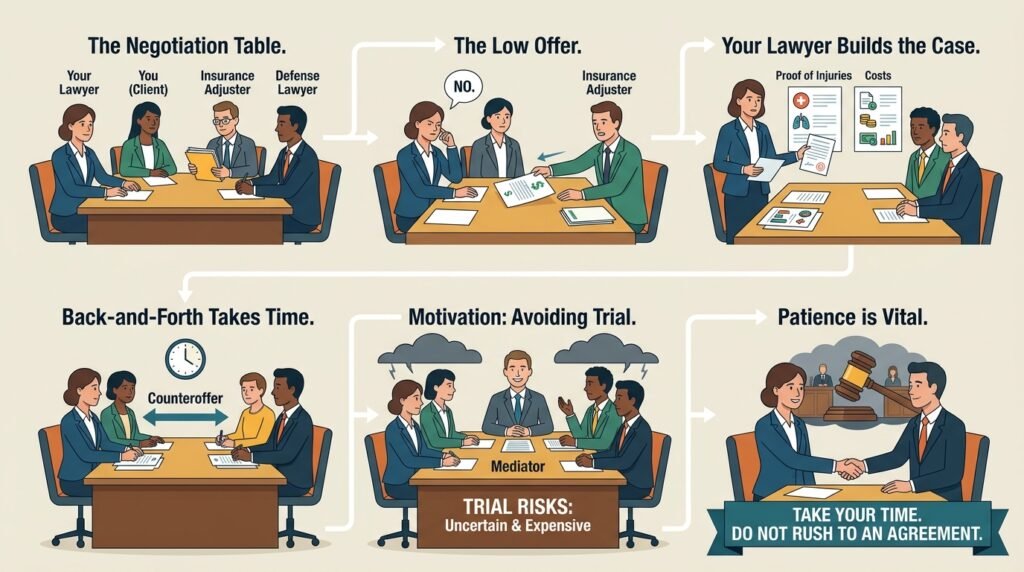
Settlement talks involve many people. There are insurance adjusters. There are defense lawyers. There is your lawyer. The first offer is usually low. This is just a start. Your lawyer will say no. They will explain why. They will show proof of injuries. They will show the costs. Then, a counteroffer is made. This back-and-forth takes time. Mediation helps break deadlocks. A neutral person helps find middle ground. Both sides think about risk. Going to trial is risky. It is uncertain. It is expensive. This fear helps both sides agree. Patience is vital here. Do not rush. Take your time.
Taxes and Money Planning
Think about taxes. Money for physical injuries is tax-free. This is good news. You keep all of it. But money for lost wages might be taxed. Punitive damages are also taxable. These are extra fines. They punish bad behavior. Some people choose a structured settlement. This means paid over time. You do not get it all at once. This helps with taxes. It helps with budgeting. It ensures money lasts. It pays for future care. Always talk to a tax expert. Do this before signing anything. They help you keep more money. They give smart advice.
Other Ways to Solve Problems
Not every case goes to lawsuit. Some hospitals have early offers. They admit the mistake. They offer money quickly. This saves time. It saves stress. Arbitration is another option. It is like a private trial. A judge-like figure decides. It is faster. But you must accept the result. Some places use disclosure programs. The hospital tells the truth. They admit the error right away. This builds trust. It leads to faster deals. These alternatives are growing. They focus on fixing problems. They do not focus on fighting. This is better for everyone.
Frequently Asked Questions
How long do I have to file a claim?
You generally have two years. This starts from the date of the mistake. But there are exceptions. Children have more time. Hidden injuries have more time. It is best to act fast. Protect your rights early.
Do I have to go to court?
No, most cases settle before trial. Mediation resolves most claims. Going to court is rare. It is usually a last resort. Most people prefer to settle.
What if I cannot afford a lawyer?
Many lawyers work on contingency. This means they get paid if you win. You do not pay hourly fees. You do not pay upfront costs. This makes justice accessible.
Can I sue for emotional distress?
Yes, you can. But Michigan has caps. Non-economic damages are limited. This includes pain and suffering. The amount has a top limit by law.
What if the doctor says sorry?
An apology is nice. But it is not legal guilt. You still need proof of negligence. Do not rely on an apology alone. You need evidence for compensation.
Will my insurance rates go up?
No, your rates will not go up. Filing a claim does not affect you. The claim is against the provider. It is against their insurance, not yours.
Can I switch lawyers if I am unhappy?
Yes, you can change lawyers. But it may delay your case. Make sure you communicate first. Talk to your current lawyer. Try to fix the issue.
What happens if I lose the case?
If you lose at trial, you get no money. With a contingency fee, you owe no legal fees. But you might owe court costs. Be aware of this risk.
Legal Disclaimer
The information in this article is for education only. It is not legal advice. Laws in Michigan can change. They are very complex. Every case is unique. It depends on specific facts. You should always consult a qualified attorney. Get advice about your specific situation. Relying on this info does not create a relationship. The author is not responsible for actions taken. Please seek professional legal counsel. Do this before making any decisions. This protects your health and rights.
Final Thoughts
Dealing with a medical mistake is hard. It brings pain. It brings confusion. It brings financial worry. But you are not alone. Understanding medical malpractice settlements in michigane gives you a path. The law is there to help. It helps you get fair treatment. Take your time. Find the right support. Gather your records. Listen to your body. Be patient. Get the right help. You can navigate this difficult time. Stay strong. Keep asking questions. You deserve to heal. You deserve to move forward. Do so with confidence. You have the knowledge now. Use it well.